Executive summary
Corona is one form of partial discharge in a gaseous medium around conductors; it is not a synonym for all partial discharge. Acoustic inspection helps localize emissions in service, while IEC 60270 addresses apparent-charge electrical measurement and IEC TS 62478 addresses electromagnetic and acoustic methods. Findings need context, repeatability and corroboration.
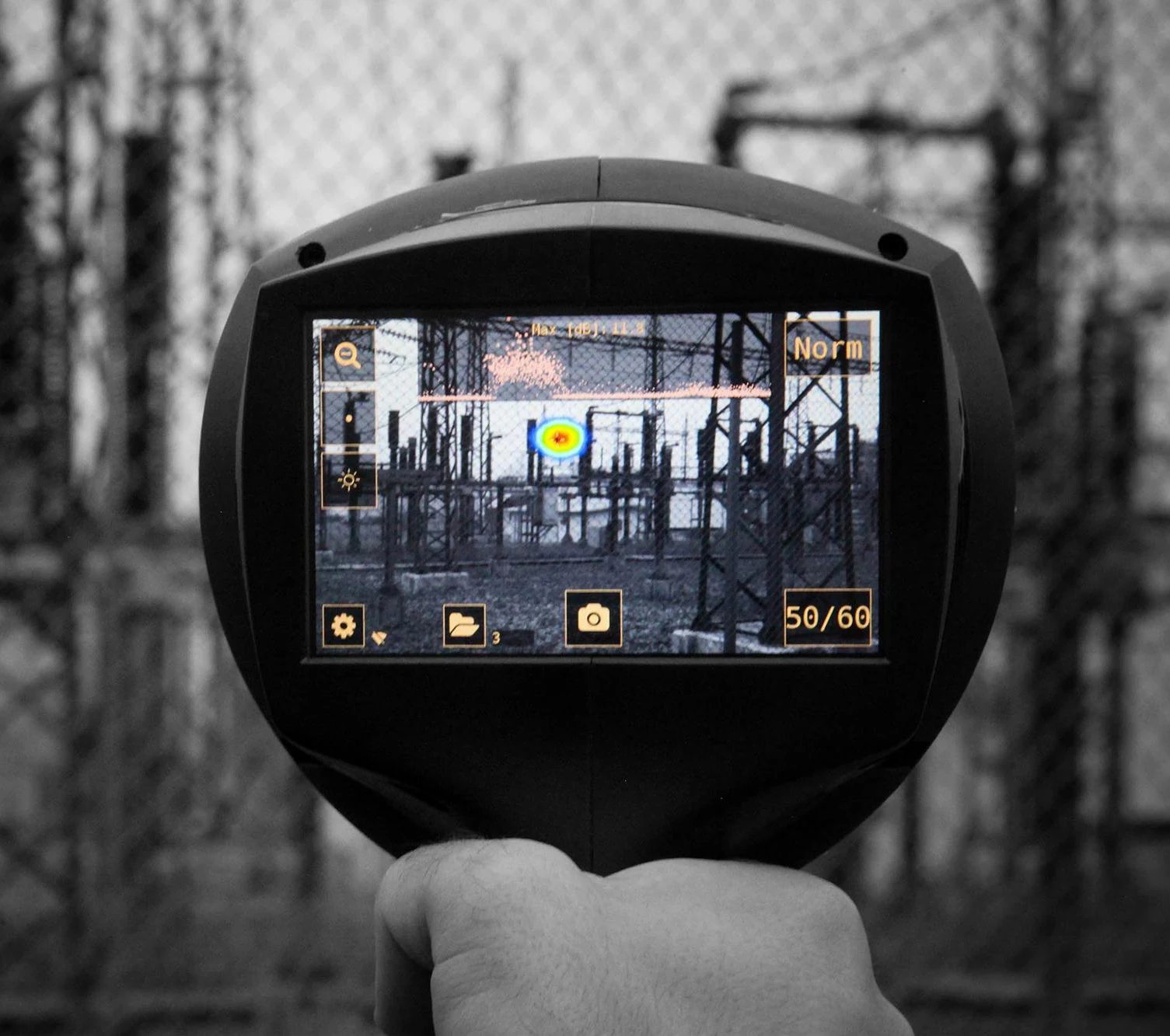
Corona does not mean every partial discharge
IEC defines partial discharge as a localized electrical discharge that only partially bridges insulation. The same reference clarifies that corona is a form of partial discharge in gas around conductors remote from solid or liquid insulation.
The distinction matters in the field: an external source in air can produce acoustic and electromagnetic signals that interfere with the search for an internal defect. Detecting a signal does not determine origin, severity or mechanism.
Corona is one subset, not the name of the whole phenomenon
What each method contributes—and cannot claim alone
| Method | Main contribution | Limits and cautions |
|---|---|---|
| Acoustic / ultrasound | Remote localization and fast in-service scanning. | Depends on acoustic line of sight, distance, reflections, noise and setup; it does not automatically provide apparent charge. |
| UV / optical | Visualizes corona optical emissions when conditions and line of sight allow. | Humidity, geometry, sensitivity and obstructions change the indication; not every internal discharge is visible. |
| UHF / VHF / HF | Detects electromagnetic emissions and can reject noise depending on asset and sensor. | Sensitivity and propagation depend on the installation; verification and asset knowledge are required. |
| HFCT / current sensors | Captures discharge-related pulses on earth paths or cable screens. | Installation, bandwidth, noise and return path constrain results. |
| IEC 60270 | Calibrated apparent-charge electrical measurement in a test circuit. | It is not equivalent to an acoustic camera and can be difficult in noisy or in-service environments. |
| Visual / thermography | Provides context on contamination, damage, geometry or heating. | No visual or thermal indication does not rule out partial discharge. |
No single method independently provides location, defect type, severity and an operational decision for every asset.
Environmental conditions are part of the data
Rain, fog, humidity, contamination and surface geometry can change the local electric field and corona activity. CIGRE documents the role of wet surfaces and water droplets in line corona noise. Reports should record weather, load, distance, angle, background noise and accessibility.
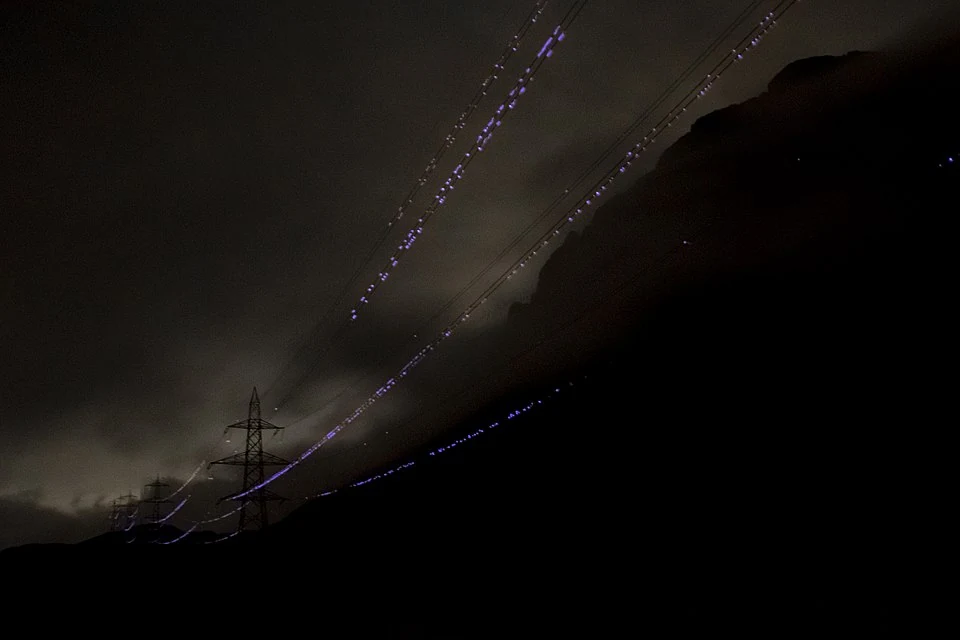
Diagnostic flow: from indication to decision
- 1Locate
Safe scan and hotspot record.
- 2Repeat
Another angle, time or setup.
- 3Correlate
Weather, load, visual, UV, UHF, HFCT or electrical.
- 4Classify
Likely origin, interference and criticality.
- 5Decide
Confirm, correct, monitor or close.
Two examples of responsible interpretation
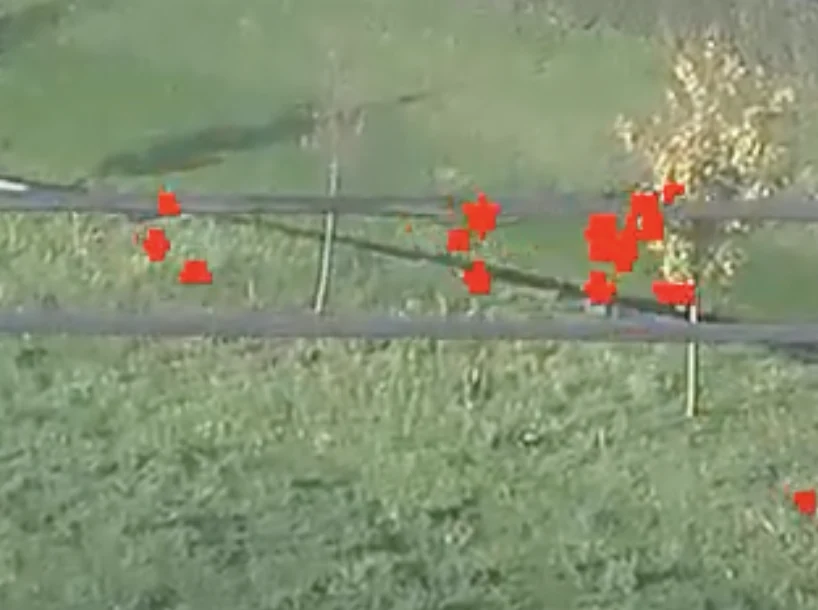
Example 1 · Outdoor fitting or connection
An acoustic camera shows a repeatable hotspot near a connection. Correct action: repeat from another angle, check interference, record humidity and load, inspect geometry/contamination and confirm with UV or another method if criticality requires it. Incorrect action: declaring an internal fault from the sound map alone.
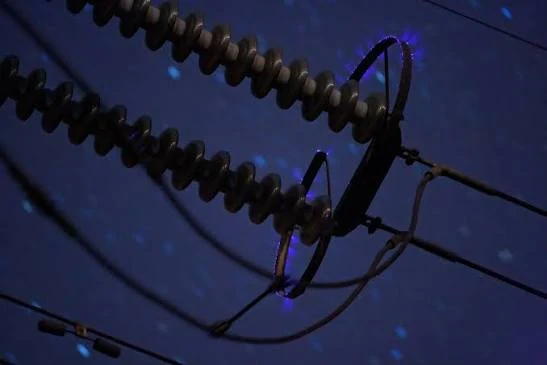
Example 2 · Cable termination or equipment
An emission near a termination may be external corona, surface discharge, internal activity or unrelated noise. Classification needs patterns, location, history and an asset-compatible method—such as HFCT, UHF or electrical measurement—before deciding repair or continued operation.
What a useful report should contain
- Objective, scope, assets and operating condition.
- Instrument, setup and applicable sensitivity check.
- Weather, load, distance, location, angle and background noise.
- Acoustic, visual and photographic evidence tied to the component.
- Repeatability, considered interference and method limitations.
- Finding classification and recommendation: confirm, correct, monitor or close.
Frequently asked questions
Are corona and partial discharge the same?
No. Corona is one form of partial discharge in a gaseous medium; other internal and surface discharges exist.
Does an acoustic camera measure picocoulombs?
Not by default. It localizes acoustic emissions; apparent charge belongs to IEC 60270 electrical measurement.
Can inspection be performed without de-energizing?
Yes. Acoustic inspection and other online methods can be applied while energized within safety controls and access limitations.
Is there a universal failure threshold?
No. Interpretation depends on the asset, method, sensitivity, interference, conditions, trend and owner or manufacturer criteria.
Does humidity invalidate the inspection?
Not necessarily, but it can change corona activity and must be recorded when findings are compared.
Verified technical sources
Sources accessed on July 12, 2026. Official IEC records and CIGRE technical publications are linked.